 | "Moreover, brethren, I declare unto you the gospel... By which also ye are saved... unless ye have believed in vain. For I delivered unto you first of all that which I also received, how that Christ died for our sins according to the scriptures; And that he was buried, and that he rose again the third day according to the scriptures" (1 Corinthians 15:1-4) |
 | |
SOLVED
Unlocking the Mysteries of the Inhabitants,
Languages and Religions of the World
Babylon and the Church Today
We have seen the sore displeasure of the Lord when Israel began to mix the Babylonish religion of the Gentiles with the worship of the One true God. The Gentile nations were formed at Babel when they turned from their Creator and began to worship the creation. How often He implored Israel not to intermingle with them, nor to imitate their ways, but they refused to hearken. After many years of longsuffering, the Lord finally removed his hedge of protection from Israel and their enemies came and destroyed their city and slew its inhabitants, and those who escaped the edge of the sword were led away into captivity.
God is the same yesterday, today and forever. He changes not, and commands the same holiness among His people today (1 Peter 1:15-16). As He admonished Israel in the past, He admonishes the church today saying, “Be ye not unequally yoked together with unbelievers: for what fellowship hath righteousness with unrighteousness? and what communion hath light with darkness? And what concord hath Christ with Belial? or what part hath he that believeth with an infidel? And what agreement hath the temple of God with idols? for ye are the temple of the living God; as God hath said, I will dwell in them, and walk in them; and I will be their God, and they shall be my people. Wherefore come out from among them, and be ye separate, saith the Lord, and touch not the unclean thing; and I will receive you, And will be a Father unto you, and ye shall be my sons and daughters, saith the Lord Almighty” (2 Corinthians 6:14-18).
In the early years of the church, when the gospel first began to be preached among the Gentiles, many of them “turned to God from idols to serve the living and true God” (1 Thessalonians 1:9). However, there was still concern that some would relapse again into idolatry so Paul found it necessary to remind the Corinthians that they should “flee from idolatry” (1 Corinthians 10:14), for they “were Gentiles, carried away unto these dumb idols, even as ye were led” (1 Corinthians 12:2). James also wrote letters to instruct them, “which from among the Gentiles are turned to God … that they abstain from pollutions of idols” (Acts 15:19-20). As well, it was essential for John to remind the disciples, “children, keep yourself from idols” (1 John 5:21).
Seeing that “idols of gold, and silver, and brass, and stone, and of wood … neither can see, nor hear, nor walk” (Revelation 9:20), why should we invoke such vanities? Or bless them? Or turn to them in prayer (or for that matter, someone whom they are alleged to represent), seeing there is only “one mediator between God and men, the man Christ Jesus” (1 Timothy 2:5), who is seated “at the right hand of God” (Romans 8:34), and is there to make “intercession for us” .
The veneration of images, idols and other religious relics is a heathen custom clearly forbidden in the Word of God, and clearly outlined in the first two of the Ten Commandments (Exodus 20:4-6). For three centuries after Christ ascended into heaven, the early Church chose martyrdom rather than participate in any form of idolatry. However, when Christianity became the state religion under Constantine, the church began to compromise The Faith, and the same abominations that infected Israel slowly began to infiltrate the communion of the church.
There is an old saying, “as goes Israel, so goes the church”, nevertheless, the ways of the heathen were to be purged like leaven from a loaf of bread. Israel was told to destroy their idols and their altars and their temples (Numbers 33:52, Deuteronomy 7:1-6), however, with the legalization of Christianity, heathen temples became “Christian” cathedrals, ceremonies were purified by the incantation of the priests, and the idols of paganism began to be venerated under the guise of the saints. In a word,
“Paganism survived...by an often indulgent Church. An intimate and trustful worship of saints replaced the cult of pagan gods...Statues of Isis and Horus were renamed Mary and Jesus...incense, processions, vestments, hymns which had pleased the people in older cults were domesticated and cleansed in the ritual of the Church ... the world converted Christianity.” (Will Durant, The Story of Civilization, Simon and Schuster, 1950)
Rather than calling believers out of the darkness to follow Christ, the church chose to enjoin pagan culture to the assembly of the saints. As culture kept advancing and intellectual progress went on, the crafts and arts arose; departments arose, each needing a god. These corruptions were maintained in the first place by the power of tradition, and were especially defended by the rich and powerful clergy. Andrew Lang in his classic, “The Making of Religion” stated,
“'God is a Spirit, and they who worship Him must worship Him in spirit and truth.' Man also is a spirit, and, as such, is in the hands of a God not to be propitiated by man's sacrifice or monk's ritual. We know how this doctrine was again disturbed by the Animism, in effect, and by the sacrifice and ritual of the Mediaeval Church. Too eager 'to be all things to all men,' the august and beneficent Mother of Christendom readmitted the earlier Animism in new forms of saint-worship, pilgrimage, and popular ceremonial---things apart from, but commonly supposed to be substitutes for, righteousness of life and the selflessness enjoined in savage mysteries. For the softness, no less than for the hardness of men's hearts, these things were ordained: such as masses for the beloved dead.” (The Making of Religion, p. 377, 2007)
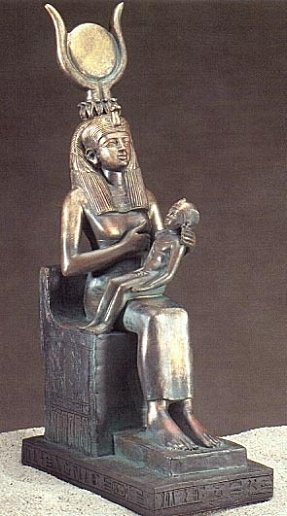
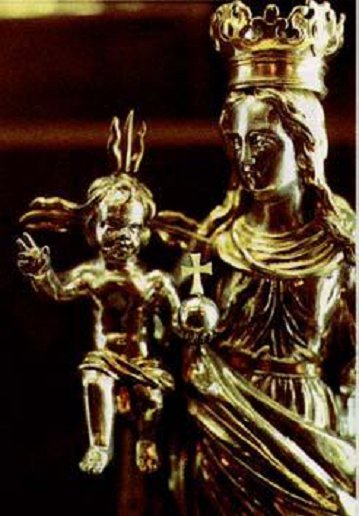
Little had changed among the Gentiles but the names of the gods they worshiped. Peter and Paul displaced Romulus and Remus as the new founding fathers of Rome. Instead of the twelve gods of ancient Rome, there were the cults of the twelve apostles, whose relics could cure diseases, control the weather, and inflict harm on those who opposed them. Instead of the cult of Diana, Queen of Heaven, there was the cult of Mary, Queen of Heaven. Instead of the gods Isis and Horus, the idols of the Madonna with child could now be venerated as Mary and the baby Jesus.
We must remember that idolatry was an extension of astrology and one of the customs of the Gentile nations was to make idols of “the signs of heaven” (Jeremiah 10:2-5, 14). Pagan idols were originally the personifications of the host of heaven, or as Stephen would say, “figures which ye made to worship them” (Acts 7:42-43).
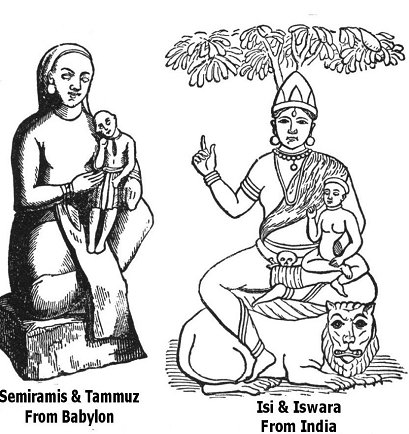
The “mother and child” cult is one example of idolatry that originated back at Babel. This image was first fashion in the heavens, and then idols were made to worship them. In Babylon, the Madonna with Child was worshipped as Semiramis and Tammuz.
“From Babylon, this worship of the Mother and Child spread to the ends of the earth. In Egypt, the Mother and the Child were worshipped under the names of Isis and Osiris [Horus]. In India, even to this day, as Isi and Iswara; in Asia, as Cybele and Deoius; in Pagan Rome, as Fortuna and Jupiter-puer, or Jupiter, the boy; in Greece, as Ceres, the Great Mother, with the babe at her breast; or as Irene, the goddess of Peace, with the boy Plutus in her arms; and even in Tibet, in China, and Japan, the Jesuit missionaries were astonished to find the counterpart of Madonna and her child as devoutly worshipped as in Papal Rome itself; Shing Moo, the Holy Mother in China, being represented with a child in her arms, and a glory around her, exactly as if a Roman Catholic artist had been employed to set her up.” (The Two Babylons, Alexander Hislop, p. 20, 1959)
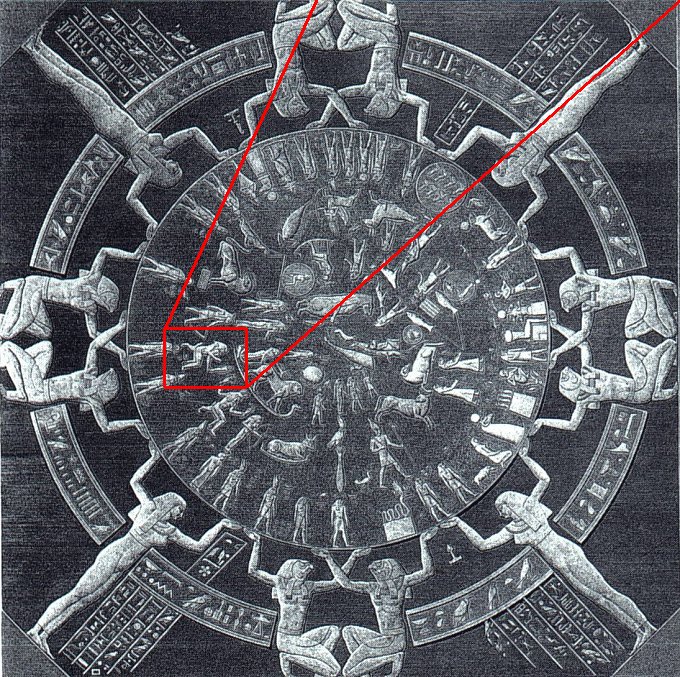
When Napoleon Bonaparte conquered Egypt, he sent his servants to do a thorough study of the Great Pyramid and several of the temples. One extremely interesting item was a detailed map of the heavens from the Temple of Hathor at Denderah, showing the constellations as they were anciently. Napoleon had his artists carefully copy all of the figures in detail, resulting in several huge volumes of drawings.
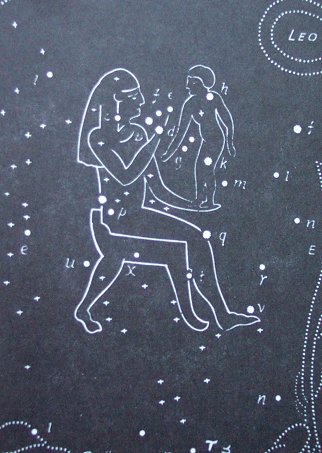
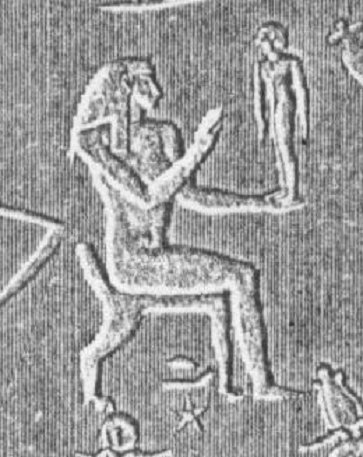
Bullinger, who put much effort into studying the constellations stated, “The Zodiac in the Temple of Denderah, in Egypt, going back at least 2000 years BC … has the figure of a woman and child … The ancient Egyptian name for this constellation was Shes-nu, the desired son! … We thus have before us the exact representations of one of these star-pictures at least 4,000 years old.” ( The Witness of the Stars , By E. W. Bullinger, 1893)
In the illustration below we have an image of the zodiac at Denderah where the
mother and child are pictured. Above that we have a side-by-side comparison of
the constellation and the image on the Denderah zodiac. As in Egypt and other
cultures around the world, “Isis … is often figured holding the infant deity
Horus” (Rolleston, Frances,
Mazzaroth; or the Constellations
, London: Rivingtons, 1862, updated in 1875, Book I, p. 17).
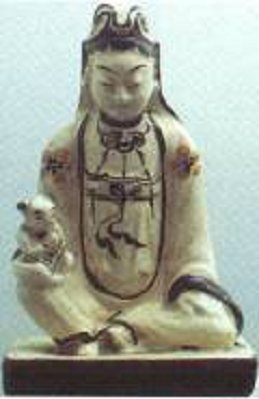
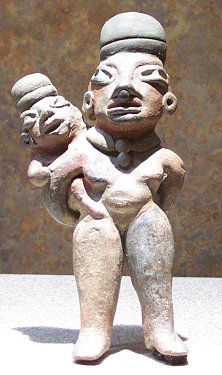
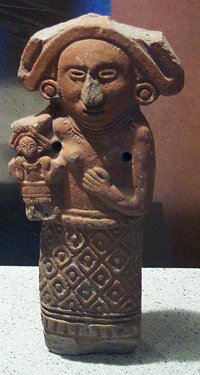
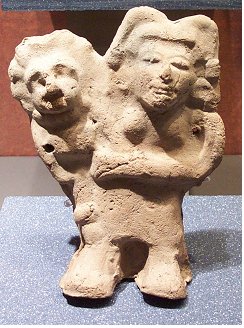
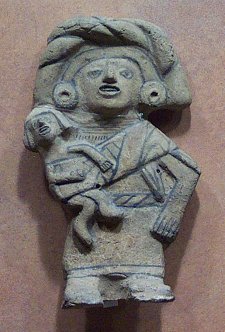
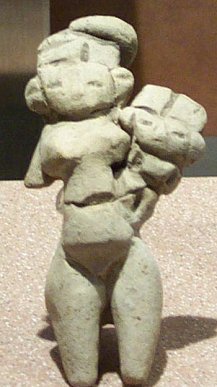
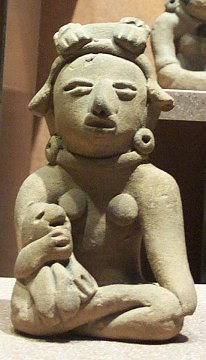
The pictures above are from the “Museo Nacional de Antropologia” in Mexico City. This Museum contains an extensive collection of artifacts with an excellent overview of the pre-Hispanic cultures of Mexico. They cover the Maya, Aztec, Huastecas, Toltecs, Tontonacs, Mixtec, Olmecs, Chichimecs, Mexicas, and many other cultures.
Included in this massive collection of artifacts are hundreds of idols that represent their gods. There are rain gods, maize gods, fertility gods, frog gods, war gods, bat gods, jaguar gods, and various astral deities of the sun, moon, planets and the stars. Within that collection were idols that bore a remarkable resemblance to the “Madonna and Child” shown above. These are clear representations of the ancient religion of Babel that spread throughout the whole earth corrupting the nations. Unfortunately, in the third and fourth centuries, Christianity adopted this same pagan religion, just like Israel.
What ever happen to the Lord's admonition to “abstain from pollutions of idols” (Acts 15:19-20)? to “flee from idolatry” (1 Corinthians 10:14)? to “keep yourself from idols” (1 John 5:21)? Paul asked the believers at Corinth who were in danger of slipping back into idolatry, “what agreement hath the temple of God with idols? for ye are the temple of the living God” (2 Corinthians 6:16). However, from generation to generation, the list of saintly intercessors grew and grew and a thousand new gods, so it seemed, were added to the Christian pantheon.
Gordon J. Laing testifies that the founders of the Catholic Church-State,
“were keenly interested in winning the pagans to the faith, and they succeeded. But undoubtedly one element in their success was the inclusion in their system of the doctrine of the veneration of Saints. They seem to have felt that in order to make any headway at all, it was necessary for them to match the swarms of spirits available for the pagans with a multitude of wonder-working Saints and Martyrs. How far they were prepared to go is indicated by their favorable attitude toward the pagan veneration of Virgil that amounted almost to deification…. The Saints succeeded to the worship of the dead just as they had succeeded to the cult of the departmental deities and to the little gods of the Roman household…. Reports of miracles wrought by human beings were common among the ancient Romans and were accepted by the great mass of people without question…. The [Roman] Christians adapted themselves to the pagan attitude. They matched the miracle-workers of the pagans with the wonder-working Saints; and with their success the number of miracles increased. The sanctity of relics, well established as it has been among the pagans, acquired far greater vogue in [medieval] Christian times and was given a degree of emphasis that it had never had before…. Like the deified heroes and emperors of pagan times, the Saints were honored with altars, sacred edifices, incense, lights, hymns, ex-voto offerings, festivals with illuminations and high hilarity, prayers, and invocations. They became intermediate divinities….” (Gordon J. Laing, Survivals of Roman Religion , pp. 8-9, 83, 120-121, 1931).
How often the church was admonished to watch and be sober. Giving idols names of saints under the pretense of piety could never please the Lord. “I am the LORD: that is my name: and my glory will I not give to another, neither my praise to graven images” (Isaiah 42:8). But somewhere along the way they forgot Paul's admonition to “ turn from these vanities unto the living God , which made heaven, and earth, and the sea, and all things that are therein” (Acts 14:15), and the Church fell into a deep slumber plunging humanity into the “Dark Ages”. This could not be more evident without a brief review of the ancient worship of the sun.
Every kindred, tribe and nation around the globe, above all their deities, gave
special reverence to the great sun god. Among the Egyptians he was revered as
Ra. Throughout the Roman Empire the sun was worshipped as Mithra. In ancient
Greece the deities of the sun were Helios and Apollo. The Phśnicians worshipped
the sun as Baal, and the Ammonites worshipped the sun as Molech or Milcom.
Among the ancient Babylonians he was worshipped as Shamash. The Mayans also
worshipped the sun, and the Aztecs called him Huitzilopotchli.
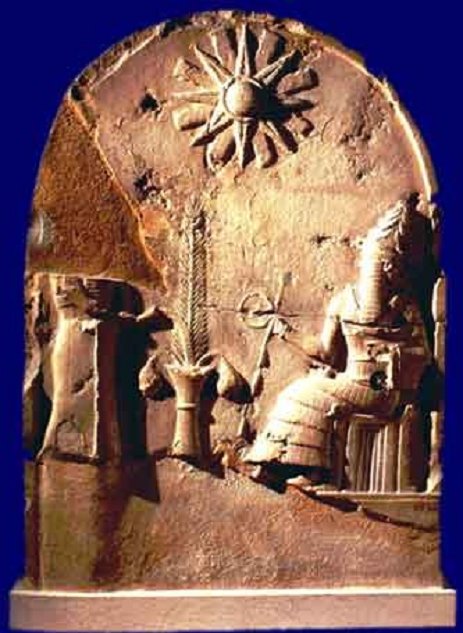
We have seen how Israel turned to this ancient form of worship (Ezekiel 8:16) and brought it right into the confines of the Temple in Jerusalem. It was for this reason the glory of the LORD departed from the Temple and the city (Ezekiel 10:18; 11:23), and their enemies were allowed to conquer them.
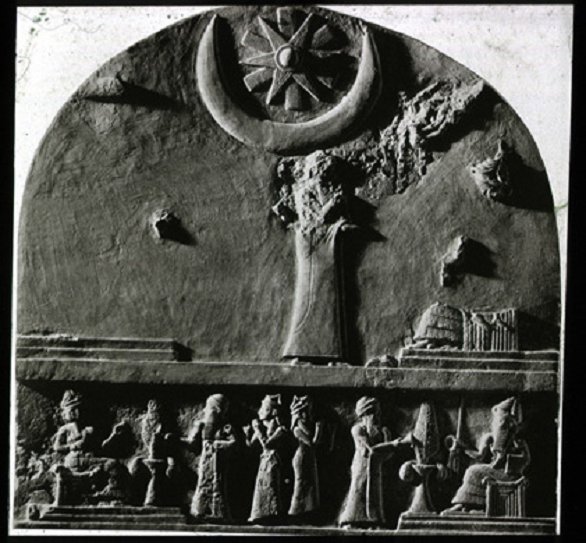
This corrupt religion was originally cultivated in the ancient land of Babel and spread out from there. Numerous steles are found in that region depicting this pagan deity.
In “Prescott's Mexico”, he provides his readers with a woodcut of “The Temple
of the Sun” (Volume I, p. 447, 1898).
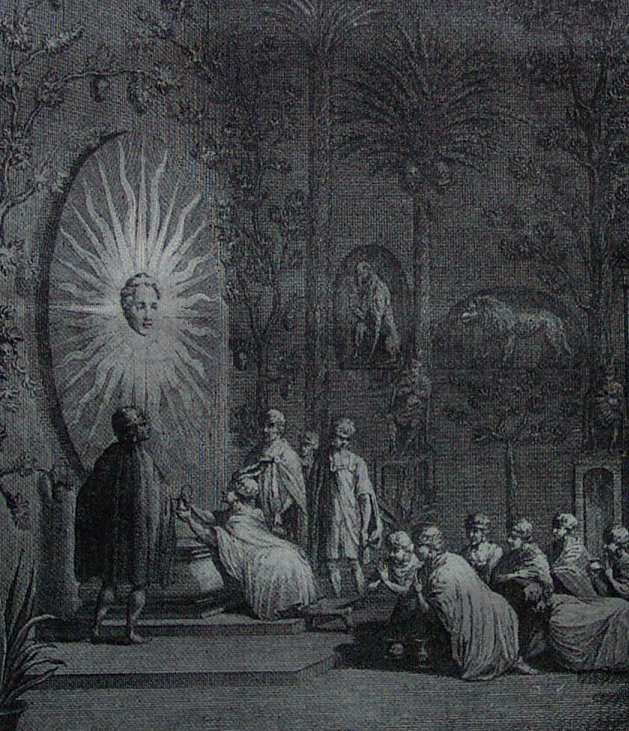
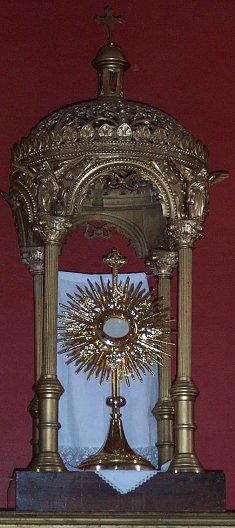
The image on the wall is typical of a “monstrance” that is used in the Roman Catholic Church to hold a piece of bread they call the “Eucharist” or the “host”. The baker first fashions the bread into little round wafers, then the Roman priest pronounces his incantation over the bread and wine making them “the body and blood, together with the soul and divinity, of our Lord Jesus Christ and, therefore, the whole Christ is truly, really, and substantially contained” (Catechism of the Catholic Church, paragraph 1374).
Each wafer is now believed to be Jesus Christ and the communicant is encouraged to bow down and worship the image of the Eucharist. Certainly, anyone who has eyes to see and ears to hear can recognize that this is nothing more than the old Babylonish religion dressed up in Christian garb.
In “Prescott's Mexico”, he recorded eyewitness accounts of a pagan ritual among the Aztecs that was astonishingly similar to the “Sacrifice of the Mass”. He said,
“they witnessed a religious rite which reminded them of Christian communion. On these occasions, an image of the tutelary deity of the Aztecs was made of the flour of maize, mixed with blood, and after consecration by the priests, was distributed among the people, who, as they ate it, “showed signs of humiliation and sorrow, declaring it was the flesh of the diety!” How could the Roman Catholic fail to recognize the awful ceremony of the Eucharist?” (Prescott's Mexico, Volume II, p. 389, 1898)
For some, the various “emblems of Christianity” “proved, in their eyes, that Christianity had been preached at some earlier date among the natives.” And, “In their perplexity, they looked on the whole as the delusion of the Devil, who counterfeited the rites of Christianity and the traditions of the chosen people, that he might allure his wretched victims to their own destruction.”(Prescott's Mexico, Volume II, p. 392, 1898)
But what could we say of pagan cultures before the Christian era, who practiced similar rituals, like that found in the Egyptian and Greek mysteries? The Aztecs could never have copied this from the church because they never heard of Christ or His doctrines before the arrival of Europeans. Where then did they get it? More to the point, where did the Catholic Church get it? For the ritual of the “Mass” is nowhere to be found in the Bible.
There are millions of monstrances in Catholic cathedrals around the world, and
many of them are set up where the Eucharist can be perpetually worshipped and
adored. It cannot be denied that they are the clear image of the pagan sun
god, worshipped by the heathen around the world.
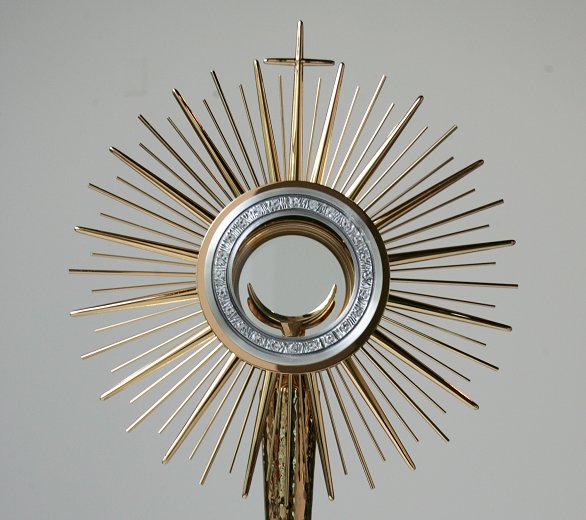
The crescent moon god Nanna was sometimes pictured with the sun god, so it is often incorporated in the design of the monstrance, just like the one below that was blessed by Pope John Paul II.
The Catholic is taught that the “host” and wine becomes the flesh and blood of Christ at his priests command. At this point, the priest elevates the “host” so the congregation can bow down and worship their god. Like the ancient Aztecs, they then receive their god to eat his flesh and drink his blood.
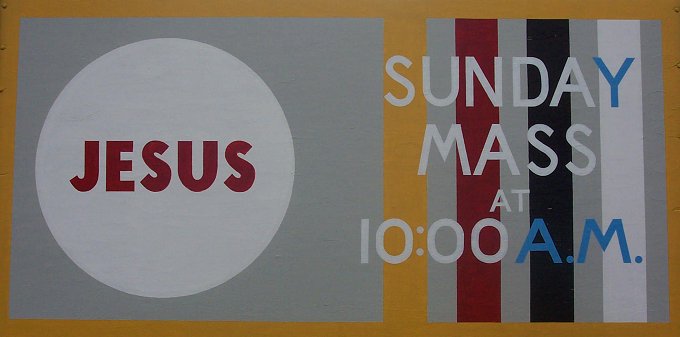
For those sincerely seeking the truth, it does not take much reasoning to see how the Scriptures have been twisted. Firstly, “God that made the world and all things therein, seeing that he is Lord of heaven and earth, dwelleth not in temples made with hands … [so] we ought not to think that the Godhead is … graven by art and man's device” (Acts 17:24, 29). Simply put, God does not dwell in anything made with the hands of men. That would include the Eucharist.
At Babel, their cardinal doctrine was that they “changed the truth of God into a lie, and worshipped and served the creature more than the Creator” (Romans 1:25). Anything made with the hands of men is most certainly part of God's creation. When mankind fashions anything with his hands and declares “these be thy gods” (Exodus 32:4), they are committing the same sacrilege that Israel did when they worshipped the golden calve.
The Lord Jesus Christ created the wheat, from which bread is made, on the third day of Creation (Genesis 1:9-13). To fashion anything from wheat and worship it as god breaks the first and second commandment (Exodus 20:1-7) of God's moral Law. Committing such idolatry is to fall back into the old Babylonish religion of worshiping the creation rather than the Creator.
As well, many Catholics believe that they need to go to the “Mass” to receive Jesus, however, the Scriptures clearly teach that the Spirit of Christ abides in every believer (1 Corinthians 3:16; 6:19, Romans 8:9) and He promises to be with them forever (John 14:16, Hebrews 13:5).
Furthermore, when Jesus, “took the cup … saying, Drink ye all of it; For this is my blood of the New Testament” (Matthew 26:27-28), it was obvious that He was speaking figuratively, for in the next verse He says, “I will not drink henceforth of this fruit of the vine” (Matthew 26:29).
The Word of God also clearly forbids believers to drink any form of blood (Genesis 9:4, Leviticus 17:11-14, Acts 15:20). To drink the blood of sacrifices is a pagan practice, and when it involves humans it is commonly known as cannibalism. The blood of God's sacrifices was to be sprinkled on the altar, and then poured at the foot of it (Leviticus 4:7, 18, 25, 30, 34). Never were they to be drunk.
After Christ died for our sins and rose again, He ascended into heaven and was set down on the right hand of God (Mark 16:19, Acts 1:11, 1 Peter 3:22, Hebrews 12:2), “till his enemies be made his footstool” (Hebrews 1:13; 10:13, 1 Corinthians 15:25, Luke 20:42-43). It is clear that He does not come back daily to be sacrificed again and again on Roman altars. That Jesus sat down indicated His work of redemption was finished. One future day He promised to return to put down all evil and to reign from the throne of David. At that time every eye shall see Him (Mark 14:62, Matthew 24:27, 26:64, Revelation 1:7).
Christ's sacrifice is “finished” (John 19:30), therefore there is “no more offering for sin” (Hebrews 10:18), for “we are sanctified through the offering of the body of Jesus Christ once for all” (Hebrews 10:10). The “Sacrifice of the Mass”, is totally contrary to the Scriptures. Roman priests claim to have the power to call Jesus down from heaven where he is sacrificed on Roman altars again and again, denying the sufficiency of His finished sacrifice. However, Jesus, “after he had offered one sacrifice for sins for ever, sat down on the right hand of God” (Hebrews 10:12).
God judged Israel when she refused to repent of her idolatry. What do you suppose will be the end of the church in these latter days? Under Constantine the church married the world thus enjoining paganism and Christianity. This unholy union was unspeakable in the days of the apostles. When the Lycaonians thought to mix the gospel with their pagan worship, Paul and Barnabas “rent their clothes, and ran in among the people, crying out, And saying, Sirs, why do ye these things? We also are men of like passions with you, and preach unto you that ye should turn from these vanities unto the living God, which made heaven, and earth, and the sea, and all things that are therein” (Acts 14:14-15).
However, many throughout history, when they saw that the State Church would not turn from their vanities, saw no other course than to separate in obedience to the Lord's command (2 Corinthians 6:14-18). They began new fellowships that were subsequently condemned and persecuted by that same Church.
These churches were generally called “Protestant”, because of their protest against the idolatry in the Catholic Church. However, under the ecumenical spirit of the age, there is no longer a protest against the hidden things of darkness. In fact, if you would seek to obey the Lord's command to “earnestly contend for the faith” (Jude 1:3), today you will find yourself up against a great wall of opposition, not against the humanists and atheists of this world, but against “churchgoers” from every creed.
Strangely enough, those who once thought it necessary to separate (Romans 16:17-20) from the Church of Rome for theological reasons are now coming full circle, and through the ecumenical spirit of the age, are coming back into the Roman fold.
As man began to drift away from the Word of God, paganism ever so subtly began to seep into the church. The only remedy was to repent and turn back to the Word of God and carefully adhere to His commands. But seeing that the church hierarchy was unwilling to reform, many believers were left with no option but to come out of her lest they be partaker of her evil deeds.
“Be ye not unequally yoked together with unbelievers: for what fellowship hath
righteousness with unrighteousness? and what communion hath light with
darkness? And what concord hath Christ with Belial? or what part hath he that
believeth with an infidel? And what agreement hath the temple of God with
idols? for ye are the temple of the living God; as God hath said, I will dwell
in them, and walk in them; and I will be their God, and they shall be my
people. Wherefore come out from among them, and be ye separate, saith the
Lord, and touch not the unclean thing; and I will receive you, And will be a
Father unto you, and ye shall be my sons and daughters, saith the Lord
Almighty”
(2 Corinthians 6:14-18).
Mat 23:9 And call no man your father upon the earth: for one is your Father, who is in heaven.
After being raised roman catholic, going to their schools for 11 years, being an alter boy, with my mother's twin brother a roman catholic priest. After studying the Bible, I asked a priest, "what do you have to say about this verse"? He said he did not know what to say. I said, "I known what to say." "I quit your religion!" Jesus is my friend and BOSS in all things. I attempt to understand what He told me to think, say, and do. All humans are wrong sometimes, including me.
Hello Jim, I can fully understand your dilemma with the RC priest, as I was born and raise a RC also. I have done the same at the bequest of my mother who insisted that I go to the priest for help in my confusion. My main question to him was about purgatory as I read in Hebrews 1, “GOD, who at sundry times and in divers manners spake in time past unto the fathers by the prophets, Hath in these last days spoken unto us by his Son, whom he hath appointed heir of all things, by whom also he made the worlds; Who being the brightness of his glory, and the express image of his person, and upholding all things by the word of his power, when he had by himself purged our sins, sat down on the right hand of the Majesty on high;” (Hebrews 1:1–3)
Christ had "by Himself purged our sins"! Our Great High Priest then "sat down", as our work of redemption was "finished" (John 19:30). Purgatory was the fictitious place where a person would go after death to have his sins purged with fire. What a lie. My Bible tells me the only was sins can be purged and washed away is with the precious blood of Jesus Christ.
He who breaks one Commandment is like breaking them all.
The marker of one Commandment that most so called Christians fail to observe is the Sabbath.
Taken from the King of kings Bible (the Messiah's Bible who has been reincarnated once again) :-
Deut.
5:12 Keep the Sabbath day to sanctify it, as the "I AM" thy God hath commanded thee. [It is NOT wrong to do GOOD deeds on the Sabbath. The Sabbath was made for man. Man was not made for the Sabbath (Mark 2:27 to 3:5).]
5:13 Six days thou shalt labour, and do all thy work:
5:14 But the seventh day (Saturday) [is] the Sabbath of the "I AM" thy God: [in it] thou shalt not do any work, thou, nor thy son, nor thy daughter, nor thy manservant, nor thy maidservant, nor thine ox, nor thine ass, nor any of thy cattle, nor thy stranger that [is] within thy gates that thy manservant and thy maidservant may rest as well as thou.
5:15 And remember that thou wast a servant in the land of Egypt, and [that] the "I AM" thy God brought thee out thence through a mighty hand and by a stretched out arm: therefore the "I AM" thy God commanded thee to keep the Sabbath day.
The Catholics perverse the second Commandment, big time:
5:8 Thou shalt not make thee [ANY] graven image, [or] ANY likeness [of ANY thing] that [is] in heaven above, or that [is] in the earth beneath, or that [is] in the waters beneath the earth [neither shalt thou possess them if others make them (ch. 7:26)]:
5:9 Thou shalt not bow down thyself unto them, nor serve them: for I the "I AM" thy God [am] a jealous God, visiting the iniquity of the fathers upon the children unto the third and fourth [generation] of them that hate [or disobey] Me,
5:10 And showing mercy unto thousands of them that love [and obey] Me and KEEP MY COMMANDMENTS.
5:11 Thou shalt not take the name of the "I AM" thy God in vain (use it when not talking to Him, or about Him): for the "I AM" will not hold [him] guiltless that taketh His name in vain [and thus wasteth His time or insulteth Him].
By images, this means faces of people and places that are of this earth. Catholic families are usually littered with images.
Hi Chris, The Sabbath was specifically determined for a perpetual observance by Israel, not the Church.
Moses was told, "Speak thou also unto the children of Israel, saying, Verily my sabbaths ye shall keep: for it is a sign between me and you throughout your generations; that ye may know that I am the LORD that doth sanctify you. Ye shall keep the sabbath therefore; for it is holy unto you: every one that defileth it shall surely be put to death: for whosoever doeth any work therein, that soul shall be cut off from among his people. Six days may work be done; but in the seventh is the sabbath of rest, holy to the LORD: whosoever doeth any work in the sabbath day, he shall surely be put to death. Wherefore the children of Israel shall keep the sabbath, to observe the sabbath throughout their generations, for a perpetual covenant. It is a sign between me and the children of Israel for ever: for in six days the LORD made heaven and earth, and on the seventh day he rested, and was refreshed." (Exodus 31:13-17)
The Church, albeit, not commanded, gathered together on the first day of the week when the Lord rose from the dead. Please read the following which may help:
https://blog.lifeassuranceministries.org/2020/06/18/24-the-lords-day-prefigured-in-the-old-testament/
To reply to Noel.
The Sabbath was intended for all humanity and certainly not to any church. Of course Israel was mentioned as a nation that has vowed to obey God and His Laws. Everyone who wishes to obey God's Laws are grafted into Israel, so this is open to all believers.
What church preachers say does not interest me, as all of them have some flaws in thier teachings which is not Biblical. As to the truth about Israel, see this site:- http://jahtruth.net/abraham.htm.
Wow!! Thank you so much for this article and the time you took to research and it explain it! Everything bears witness with my spirit...I was looking for info about the ancient Mayans as my husband is Argentinan...his mother is Roman Catholic..I have noticed there are certain pagan relics in her house that are Mayan...there is one in particular that I feel is definitely demonic and The Lord showed me in a series of remarkable dreams that there is "Mayan stone" that is holding a very strong bondsge over my husband's bloodline and it has effected him tremendously in a negative way. I cannot disclose all of this here but would like to ask you some questions as to these artefacts and relics I have found in her house. Thank you for your insight on idols and the scriptures addressing it..they will be very helpful to me.
Hi Nicky, glad you found this helpful. I have a book I wrote on this subject matter that is available online here: https://www.accordingtothescriptures.org/Book/Mysteries.html
You can email me if you like at noel@accordingtothescriptures.org or reply here in the comments.
Read your Bible, Shalom
Nice work. A lot of great content. There was a very good video made by John Spirit on Paul electing himself as a 13th apostle, he proved otherwise using the bible verses just as you do.
Peace and cheers!
As we kNow there really only is Now. You've woN when you kNow that there owNly is NOW!
MON
Moon Moon Eye 3rd Eye god 69 yin yang
Mon-Key is in the middle of the zodiac. aMoN. Alpha to Omega. Amen to that!
The little prince is a young star (youngster) that will pass through MaMa right through the Throne-Crystaline Sea to become WaWa, what is not Water.
Thank you all for this enlightening discussion. One commandment proves who is closer to God- the one who loves their neighbor as themselves as Jesus commanded. I have die hard Catholic relatives and fired up Pentecostals. Funerals are a mess due to different ways of having a relationship with our creator. I sensed some bitterness, mockery, disdain, and self gloating coming off some statements here. I'm convinced Noel has the cleaner heart. Stay humble God lovers! Even I know not to make image of whats above! Let alone asking clay to pray for me.
Greetings just wanting to say u believing that someone died for your sins or that u were born in sin is not true also....because that also is an invention of the Catholic church
The Scriptures are clear about original sin. "Wherefore, as by one man sin entered into the world, and death by sin; and so death passed upon all men, for that all have sinned" (Romans 5:12). Adam brought sin into the world. All of humanity was in Adam and so all of His offspring are born in his likeness (Genesis 5:3) after the flesh (John 3:6). So the Psalmist could say, "Behold, I was shapen in iniquity; and in sin did my mother conceive me." (Psalm 51:5) Job made this quite clear. "Who can bring a clean thing out of an unclean? not one." (Job 14:4)
This was the reason that Christ died for our sins (1 Corinthians 15:1-4). Read Isaiah 53:1-12
I doing some research about the Roman Catholic Church. It has all the hallmarks about it being the Whore of Revelation. Its daughters are the Protestants and the Orthodox. They all practice Idolatry. I was raised as a Catholic and been thought by Jesuits.
The second Commandment is very clear, no statues or images of heaven. Look at both the Exodus and Deuteronomy versions. No amount of interpretation or twisting things can set things right. After the first point in the 2nd Commandment, one should not serve it, and not bow down to it. Pope Francis and other popes and bishops do precisely these 3 points, proving that they disobey it perfectly.
Check out my letter to priests here:- https://100777.com/spiritual/lettertoparishpriest
Noel, don't be too concerned with the comments made by Anna, because she is only regurgitating what she has been taught but never bothered to question her teachers. It is no different than the resistance Jesus encountered, when he tried to teach the Truth to the scribes, Pharisees, and Sadducees. They refused to listen, and most refuse to listen today, and I could say the same about most denominations. Jesus never collected money, and there is not one verse in Scripture to support the act, even though most use I Corinthians 16:2 to justify their collections. The verse in the KJV is poorly translated, and I advise many to read the Koine Greek for themselves. Furthermore, I advise them to read I Corinthians 16:1, because Paul told them to do as he had prescribed/ordered the churches at Galatia, but when you read the book of Galatians, money is not mentioned once, but many other Godly teachings are prescribed.
The RCC has a net worth (as best I can attempt to determine) of over 1.5 "trillion" dollars and is continuing to grow like a cancer. They even found some accounts in European banks a few months ago that contained billions of Euros, and the RCC was unaware that the accounts even existed, so the value of the RCC is probably even greater, and they continue to collect money. If you read Matthew 8:20 and Luke 9:58, Jesus didn't even have a place to lay His head, and there is not one verse in Scripture where Jesus ever collected money. He performed countless miracles for those who simply asked and believed in Him. He never even asked them if they had been to the synagogue on the sabbath, but He did tell them to do as the law of Moses required. I could go on for hours, but why bother. Most don't want to hear the Truth, and the Truth is that religion today is big business and big money, but there is no verse in Scripture which states that God sent His Son into this world to provide jobs for people, and if those who "preach" aren't paid, they seek other employment or a more lucrative denomination. We are God's "slaves", not His employees. He already gives us everything, but most appreciate nothing, unless is involves money.
The biggest hoax the RCC ever perpetrated on the Church was the fourth century man-made doctrine of the holy trinity, and over 90% of "Christians" still believe and teach it today. They don't bother to "study" Scripture or history, because if they did, they would find the Truth. Jesus never said He was God, and most of those who advocate the "trinity" never bother to read John 10:29 or 14:28. Most don't even understand what God spoke into existence on the first day of Creation in Genesis 1:3, and it is important to understand who or what the "Light" is, or much of Scripture will remain in darkness, even to those who seek its hidden treasures. God has no desire for us mere humans to remain ignorant of His Word, and He certainly never authored confusion. As I told a RCC priest a few days ago, who apparently doesn't understand Revelation 1:6 or 5:10, that Scripture contains only one true interpretation, but men have concocted many misinterpretations, which continue to hinder those who should be seeking Truth, knowledge, and wisdom of God's Word. After all, there is a reason the Parakletos will remain with us forever, as John so wrote in John 14, 15, and 16, but if we don't "read" and "study" diligently, how is it even possible to learn, because we have our annointing, as John also wrote in I John 2:27, but we cannot find It if we do not seek It.
Damon, let me assure you that I am concerned about the comments made by Anna otherwise I would not have commented back to her. Furthermore, I am concerned about you also as you appear to be on a path that runs parallel with Anna, rather than in the other direction.
There are many cults that hold the same view as you regarding the deity of Christ and the Trinity. Jehovah Witness, Unitarians, United Pentecostal, Muslim, Orthodox Judaism, etc. There are many Scriptures that clearly teach these doctrines, but wherever the Scriptures refute your position you say the KJV is a bad translation. Now I am not a Greek Scholar, but I doubt very much that you are either. As for the 54 men involved in producing the KJV, they were Scholars. Most of them were not only fluent in Greek, Hebrew and Aramaic but also Latin and other oriental languages that the Scriptures had been translated into. And we all have easy access to Strong's Exhaustive Concordance if we want to dig a little deeper into the original texts, but at the end of the day, I would take their translation in a heartbeat over yours.
Your misinterpretation of light in Genesis 1 is totally out of context. Verse 1 reads, "In the beginning God (Elohim; plural, literally Gods) created the heaven and the earth" Here, Jesus, the Word of God, spoke the time, space and matter of the universe into being. The earth was the building blocks from which God made all things but on day one, "the earth was without form, and void" (v. 2). It was unformed and unfilled. God then created light which is the most basic form of energy. The sun was created on day 4 but God does not need a sun to have light, and setting the earth in motion began the sequence of day and night. The subsequent days of Creation He began to shape and form and fill His creation. It is really that simple. "By the word of the LORD were the heavens made; and all the host of them by the breath of his mouth...For he spake, and it was done; he commanded, and it stood fast." (Psalm 33:6, 9)
No interpretation is required. You will be far better off taking the text in its plain sense rather than forcing your interpretation on the Scriptures as you will get it wrong every time.
Rather than going into great detail here on some of the doctrines you brought up, check the home page heading of Jehovah Witness. There are several articles there that reflect the belief that I have on the deity of Christ and the Trinity. I repaired some of the links that were not working.
I will leave you with this thought. When the devil came tempting Christ to worship him, Jesus replied, "Thou shalt worship the Lord thy God, and him only shalt thou serve." (Matthew 4:10) Now all through the NT there are many who worshipped Jesus and He never rebuked them.
When John was on the Isle of Patmos receiving the Revelation, John fell at an angels "feet to worship him. And he said unto me, See thou do it not: I am thy fellowservant, and of thy brethren that have the testimony of Jesus: worship God..." (Revelation 19:10) And the Scriptures teach, "let all the angels of God worship him" (Hebrews 1:6), that is, Jesus Christ. And all throughout the Revelation, we never find Jesus Christ among those worshipping God, rather He is upon the throne with His Father being worshipped by His people.
So, either Jesus Christ was a hypocrite to receive worship or else He was God. I believe He is the "Almighty God" (Genesis 17:1, Revelation 1:8), "God with us" (Matthew 1:23), for "God was manifest in the flesh" (1 Timothy 3:16), the only wise God and our Creator, Redeemer and Saviour, Jesus Christ.!
| Copyright © 2018 AccordingtotheScriptures.org. All rights reserved. |  | Home | Our Purpose | Statement of Faith | Contact | Subscribe |